
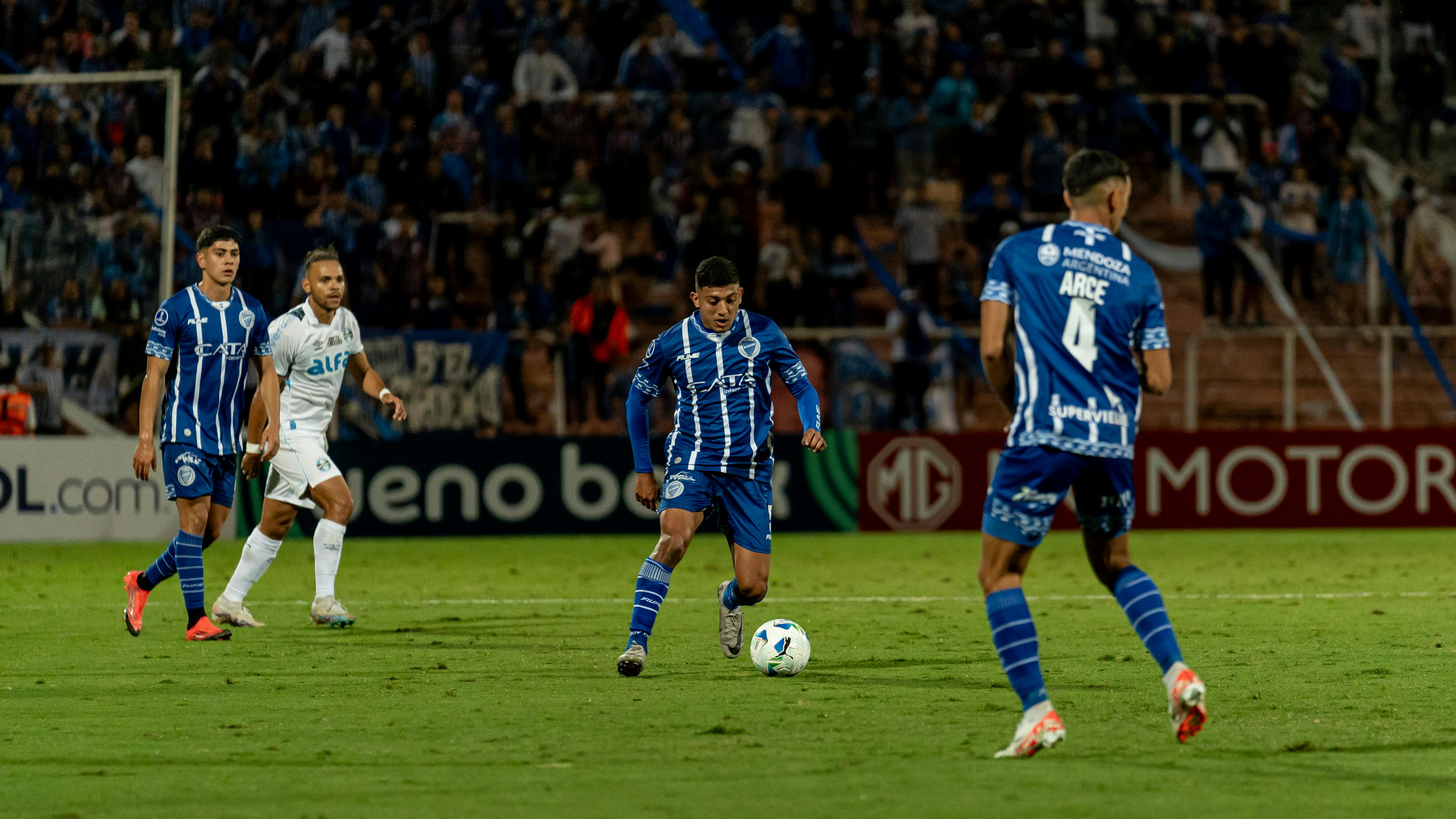
Anyone who follows Spanish football alongside English or German football notices the calendar differences quickly. Matches kick off later, sometimes much later. The season is structured differently around the turn of the year. Fixture scheduling has a distinct rhythm.
Most of it comes down to two factors that reinforce each other.
The climate factor
Spain in August and early September is hot, and in the south it's extremely hot. Afternoon temperatures well above thirty degrees are routine, and playing competitive football in those conditions is genuinely dangerous.
So early-season fixtures get pushed later into the evening. A 21:00 or 22:00 kick-off in August isn't a broadcaster's whim, it's the earliest point at which conditions are reasonable.
This is a real physiological constraint. Studies on heat and football performance find substantial decrements in high-intensity running and increases in perceived exertion at high ambient temperatures, alongside genuine health risks. Cooling breaks became standard for good reason.
Once late kick-offs are established for climatic reasons in August, the infrastructure and audience habits adapt, and they persist through the season when the original justification has passed.
The television factor
The larger driver. Spanish football's broadcast strategy has deliberately spread fixtures across as many distinct time slots as possible.
The logic is that a match that doesn't clash with another match captures the whole audience. Spreading ten fixtures across Friday evening to Monday evening, in slots that don't overlap, maximises total viewing hours and therefore the value of the rights.
This produces a weekend with football almost continuously, which is excellent for broadcasters and for neutral viewers, and less good for supporters who have to plan travel around a fixture time confirmed a fortnight in advance.
There's also an explicit international dimension. Certain kick-off times are selected to suit audiences in Asia and the Americas, which is a significant revenue consideration for a league with a large global following.
The winter arrangement
Spain doesn't have a full winter break in the German sense, but the schedule around late December and early January is lighter than in England, with a pause of a couple of weeks.
Whether this is meaningfully beneficial is contested. The evidence on winter breaks and injury rates is not as clear-cut as commonly assumed — some studies find benefits, others find the effect is confounded by overall fixture load.
What a break does more reliably is provide a training window in mid-season, which coaches value highly. Getting two weeks to work on something tactically in January is a genuine advantage over a league where you go from match to recovery to match for four months.
The Monday night problem
A specific consequence worth mentioning. Fixtures scheduled on Monday evenings have been a persistent source of friction, and supporter groups have campaigned against them repeatedly.
The objection is straightforward. A Monday night away fixture is effectively impossible for a working supporter to attend, particularly given Spanish geography. It converts a match from something you can go to into something you watch.
The counter-argument is revenue, and the revenue argument has generally won.
This is a version of a tension that exists in every major league — the interests of attending supporters and the interests of broadcast revenue are not aligned, and the money is on one side. Spain has resolved it further towards broadcast than most, which is a choice with visible consequences for atmosphere in some fixtures.
Effects on the football
Does any of this change how matches are played? A few plausible mechanisms.
Late kick-offs affect recovery for travelling teams, as discussed elsewhere. A team finishing at midnight and travelling home arrives in the early hours, losing a recovery day relative to the home side.
Heat in early-season matches genuinely changes the game — lower intensity, more possession-based play, fewer high-intensity efforts. Teams that rely on pressing are disadvantaged in those conditions, and it's noticeable that early-season Spanish matches often look different in character to the same fixtures in March.
And the spread of fixtures means teams frequently play knowing the results of rivals, which affects in-game decision-making in the closing stages of a season. Whether that's good or bad is a matter of taste; it certainly makes final-day scheduling more important.
The comparison
There is also a competitive wrinkle that follows from the spread of kick-off times, and it becomes significant in the closing weeks of a season.
Because fixtures are distributed across four days, a team playing on Monday evening knows exactly what every rival has done. That is an advantage in one sense — you know whether a draw is sufficient — and a disadvantage in another, because a team chasing a target under that knowledge carries a pressure that a team playing in ignorance does not.
Leagues generally address this by scheduling the final round of fixtures simultaneously, and Spain does the same. But the penultimate rounds, which are frequently just as decisive, remain spread out, and the resulting information asymmetry is a real if modest factor in how title and relegation races resolve.
None of this makes Spanish scheduling better or worse than elsewhere, but it does make comparisons awkward.
Assessing a Spanish team's fixture congestion against an English one requires accounting for different rest patterns, different travel demands, and a different distribution of kick-off times. The raw count of matches in a period isn't comparable.
Which is worth remembering whenever somebody argues that one league is more demanding than another. The demands are differently shaped, and the shape matters as much as the total.