
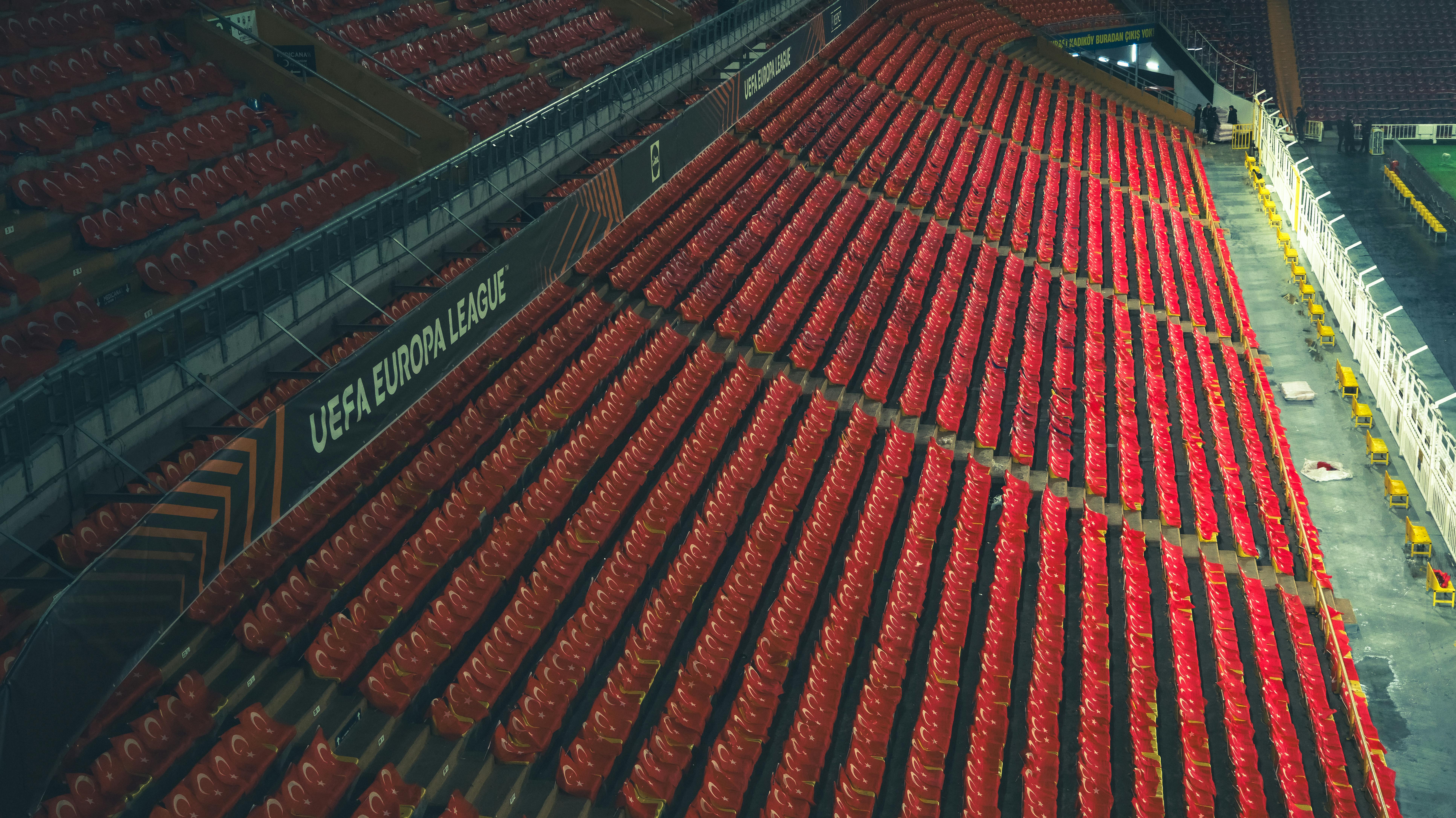
Away form in European competition is worse than away form domestically, and the distance travelled explains only part of it. The rest comes from a set of unfamiliar variables that arrive together.
The playing surface is a genuine variable
Pitch dimensions vary within permitted limits, and a narrower or shorter field compresses the space a possession team relies on.
Surface quality differs too, with climate, ground-sharing and maintenance budgets all affecting how true the bounce is and how quickly the ball travels.
Teams train on their own pitch all week and then play on one they have walked across once, which affects timing more than technique.
Climate and altitude do not adjust
European competition spans a wide geographic range, so a club can travel from cold, damp conditions into heat, or from sea level into thin air.
Altitude in particular affects endurance and the flight of the ball, and adaptation takes far longer than the day or two a fixture allows.
These effects are not distributed evenly. Clubs from the geographic centre of the continent face them rarely, while those on its edges encounter one or another of them in most rounds.
Squads that travel widely every season develop routines for it, which is a small advantage that only accumulates over years of participation.
Refereeing interpretation varies
Officials come from different national traditions, and tolerance for physical contact, time-wasting and shirt-pulling differs measurably between them.
A team accustomed to one standard can accumulate bookings early simply by defending the way it does every weekend.
Coaches brief squads on the appointed official for exactly this reason, and the briefing matters more in Europe than domestically.
Crowd and stadium effects concentrate
European nights are the biggest fixtures of the season for many hosts, so the atmosphere is more intense than the same club generates domestically.
Stadium design amplifies this where stands are steep and close to the pitch, and noise affects communication between players more than commonly assumed.
The effect on officials is contested and probably real, though it is smaller than the effect on the visiting team's composure.
Scheduling stacks the difficulty
Long trips are often followed by a weekend domestic fixture at short notice, so the cost of the journey is paid twice.
Kick-off times in distant time zones can also fall outside a squad's normal rhythm, which affects preparation on the day.
None of these factors is decisive alone. They accumulate, which is why the away record in Europe looks different from the away record at home.