
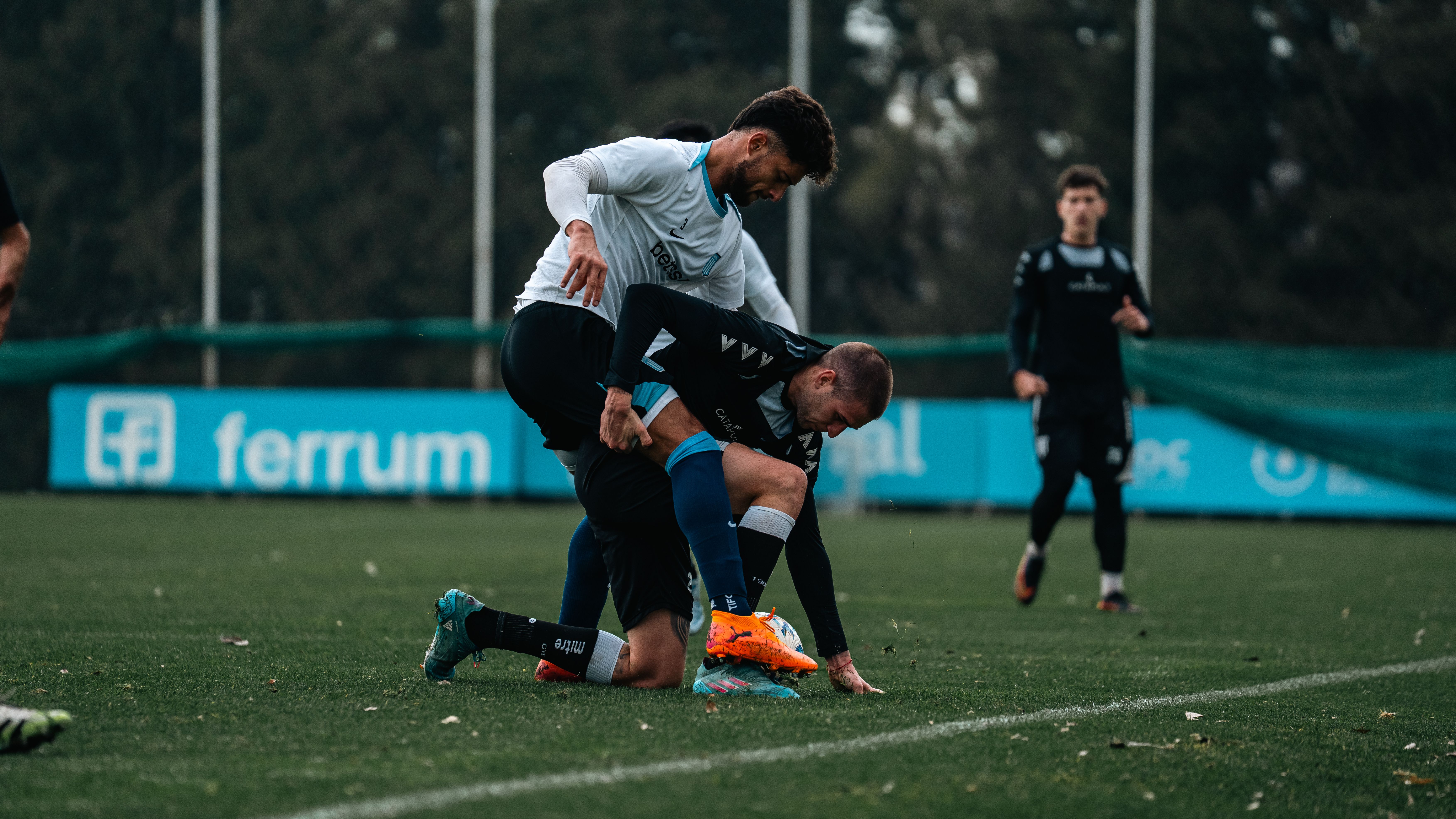
The days before a match determine how much of a team has actually trained together. Travel, international duty and awkward kick-off times routinely leave a coach preparing with half a squad.
International breaks scatter a squad
Players leave for national duty at different times, play in different competitions and return across a spread of days, some of them after long-haul flights.
The coach may have the full group together for a single session before a weekend fixture, and that session cannot be demanding.
Clubs with many internationals are affected most, which means the strongest squads carry the largest disruption after every break. A side with three or four call-ups prepares almost normally while a rival with fifteen does not prepare at all.
Long journeys cost more than the hours
Time-zone changes disturb sleep for several days, and sleep quality affects reaction time and decision-making more than it affects physical output.
Returning players are also arriving from a different climate and playing surface, having had no preparation for the opponent they now face.
The cost is largely cognitive, which is why it shows in positioning and coordination rather than in running distance.
Domestic travel is not negligible
Away fixtures at the far end of a country involve overnight stays, unfamiliar beds and a departure that removes a training day.
Clubs mitigate this by travelling early and training at the destination, though the routine is still disrupted relative to a home fixture.
The effect is small per match and consistent, which is part of why home advantage exists at all. Leagues covering large countries show it more clearly than compact ones where every trip is short.
Kick-off timing compounds it
An early Saturday fixture after a Thursday evening match leaves under two full days, and a lunchtime kick-off shortens the final morning as well.
Broadcast scheduling produces these sequences regularly, and they are visible in the fixture list weeks in advance.
A team facing that pattern is preparing under conditions the fixture list chose for it rather than ones the coach would pick.
Where to find the information
National team fixtures are public, so which players travelled and how far can be established before any club statement appears.
The gap since the previous match and the location of that match are equally public and take a moment to check.
Combined, they explain a meaningful share of the flat first halves that get attributed to complacency after the event.