
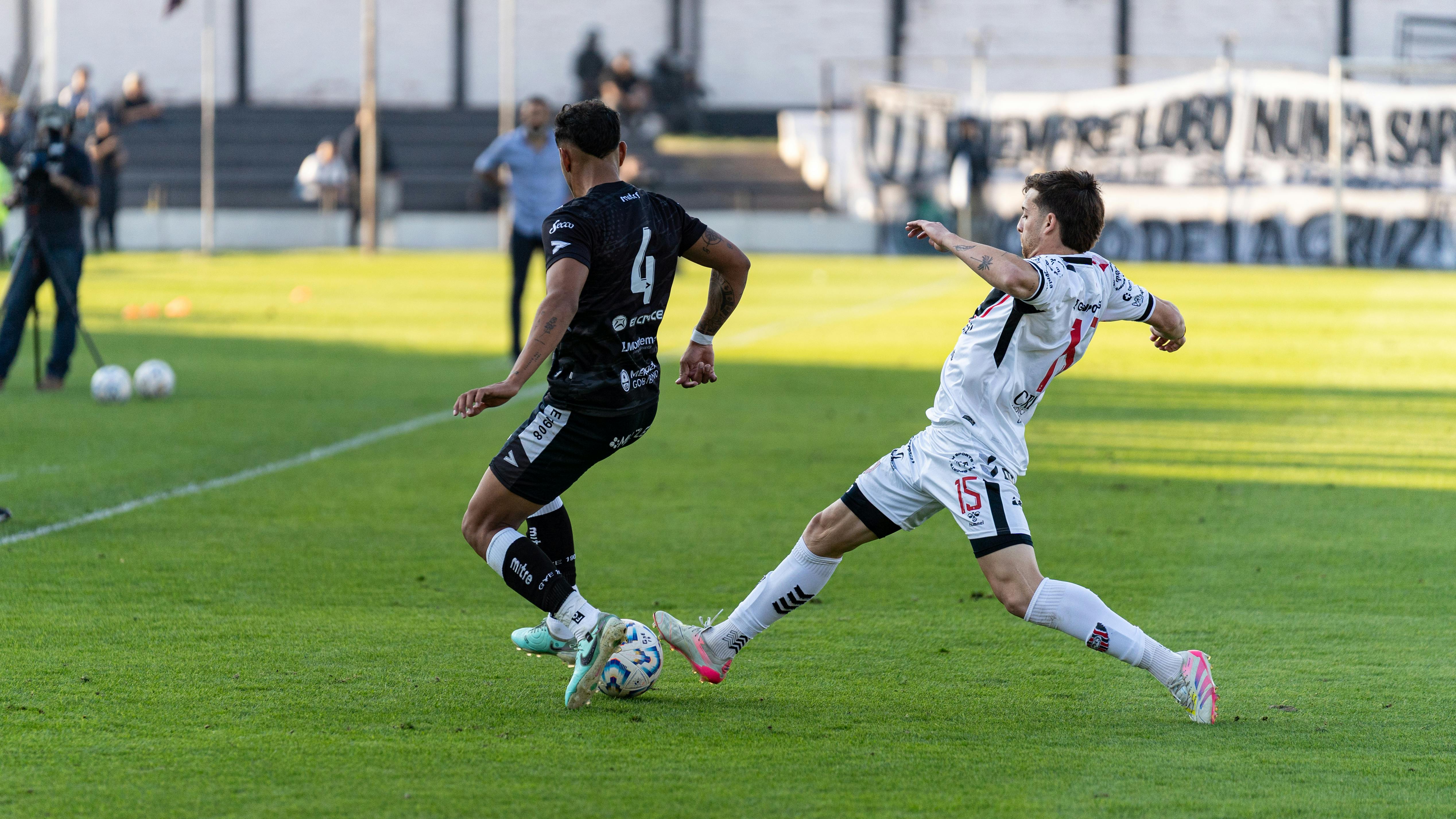
Mention Serie A in most football conversations and somebody will make a joke about 0-0 draws and defensive football. It's one of the stickiest stereotypes in the sport and it's been substantially wrong for a long time.
Goals per match in Italy have been broadly comparable to other major European leagues for years, and in some seasons higher. The catenaccio reputation is describing football that stopped being played around the time most people watching now were born.
Where the reputation came from
It wasn't invented. Italian football in the 1960s and 70s genuinely was defensively oriented, and the systems developed there — the libero, aggressive man-marking, deep organised blocks — were both effective and distinctive.
The reputation was then reinforced by a specific period in the 1990s and early 2000s when Serie A was arguably the strongest league in the world and its matches were tactically cautious. That was the era when the league had the most international attention, so the impression set hard.
What happened afterwards — a long decline in the league's financial position, a rebuilding, and a substantial tactical evolution — got much less coverage, because fewer people outside Italy were watching.
What actually changed
Several things, over roughly two decades.
Coaching turnover and foreign influence. A generation of Italian coaches who trained in a different tradition, plus imported ideas from Spain and Germany. Pressing systems that would have looked alien in Italian football in 1995 are now standard.
The three-at-the-back revival. Italian football adopted aggressive back-three systems earlier and more thoroughly than most leagues, and the version played there is generally not defensive — wing-backs push extremely high and the wide centre-backs step out aggressively.
Financial reality. When Serie A had the most money, clubs could assemble squads capable of controlling matches through quality and could afford to be cautious. When they couldn't, they had to play in ways that generated chances, which is a different kind of football.
Rule changes and officiating. More protection for attacking players and stricter enforcement of tactical fouling made the old disruptive defensive approach much harder to execute.
The tactical character now
What genuinely does distinguish Italian football, in my view, isn't defensiveness — it's tactical specificity.
Italian coaching culture places unusual emphasis on preparing for the specific opponent. Teams change shape, personnel and approach between matches more readily than in some other leagues, where a fixed identity applied regardless of opposition is more common.
That produces matches with a lot of in-game tactical adjustment, substitutions that change the structure rather than just the personnel, and a genuine chess-match quality that doesn't necessarily mean fewer goals.
It also means that scouting a Serie A team is harder, because what they did last week may not be what they do next week.
The defending is still good
Youth coaching is part of the explanation. Defensive technique is taught in Italy as a discrete craft with its own vocabulary and its own progressions, in a way that is not universal elsewhere. A young centre-back there will spend hours on body orientation when defending a runner, on when to engage and when to delay, on the specific mechanics of defending a cross at the near post versus the far post. In several other systems that work happens incidentally, inside team sessions, rather than as dedicated individual coaching.
The other factor is that the domestic game still punishes defensive errors heavily. Serie A attacks tend to be patient and to probe for a specific mistake rather than trying to overwhelm through volume, which means a defender who switches off for one moment is likely to be found. Defending in that environment for a few seasons produces a particular kind of concentration that travels well.
One part of the stereotype does survive scrutiny: Italian football continues to produce excellent defenders, and defensive coaching there is genuinely strong.
Individual defensive technique — body positioning, timing of the challenge, defending in the box, reading a cross — is taught with a rigour that isn't universal. Italian centre-backs remain among the most sought-after in Europe and that's not an accident of reputation.
The difference is that good defending now happens within teams that also attack, rather than as a substitute for attacking.
Why the stereotype persists
Partly inertia. Stereotypes about leagues update slowly and mostly through casual conversation rather than data.
Partly broadcast patterns. Serie A has had less international television presence than some rivals for a long stretch, so fewer casual viewers have had their impression updated by actually watching.
And partly because the stereotype is useful as a shorthand in punditry. "Italian defensive discipline" is an available explanation for any result involving an Italian team, and it requires no research.
What to expect if you start watching
Practical notes for anyone approaching the league fresh.
Expect goals. Not a shootout every week, but comparable rates to elsewhere.
Expect formations to vary considerably, including within matches, and expect the graphic at kick-off to be a rough guide at best.
Expect very high-quality defending in the penalty area specifically, which is one genuine stylistic marker.
And expect a wider spread of tactical approaches than in some leagues, because there's less of a dominant orthodoxy. That variety is, for me, the main reason to watch it.