
"They haven't won there in eleven years." "He's never lost against this manager." "Four wins in the last five meetings." Head-to-head statistics are a staple of pre-match coverage and they carry an implied causality that almost never survives examination.
Most of the time the record is a coincidence dressed as a pattern. But not always, and the exceptions are interesting.
Why it's usually noise
Two clubs meeting twice a season have played maybe twenty matches in a decade. Over that period both squads have turned over completely, probably more than once. Managers have changed, sometimes four or five times each. Tactical approaches have changed. The relative financial positions of the clubs have likely changed.
What exactly is supposed to persist through all of that? The badge on the shirt.
Even taking the record at face value, twenty matches is a small sample. If two evenly matched teams play twenty times, sequences of four or five consecutive wins for one side will occur regularly by chance alone. Finding such a sequence and treating it as meaningful is exactly the error of looking at a random series and seeing structure.
The selection effect
There's a subtler problem. Head-to-head stats are quoted when they're striking, and not quoted when they aren't.
Nobody ever says "these teams have alternated results in a completely unremarkable way over the last decade." The stat only appears when there's a streak, which guarantees that every head-to-head stat you encounter has been selected for being unusual.
Given thousands of fixture pairings across dozens of leagues, some of them will have long streaks. That's arithmetic, not destiny.
Exception one: genuine derbies
Here's where I think there's something real.
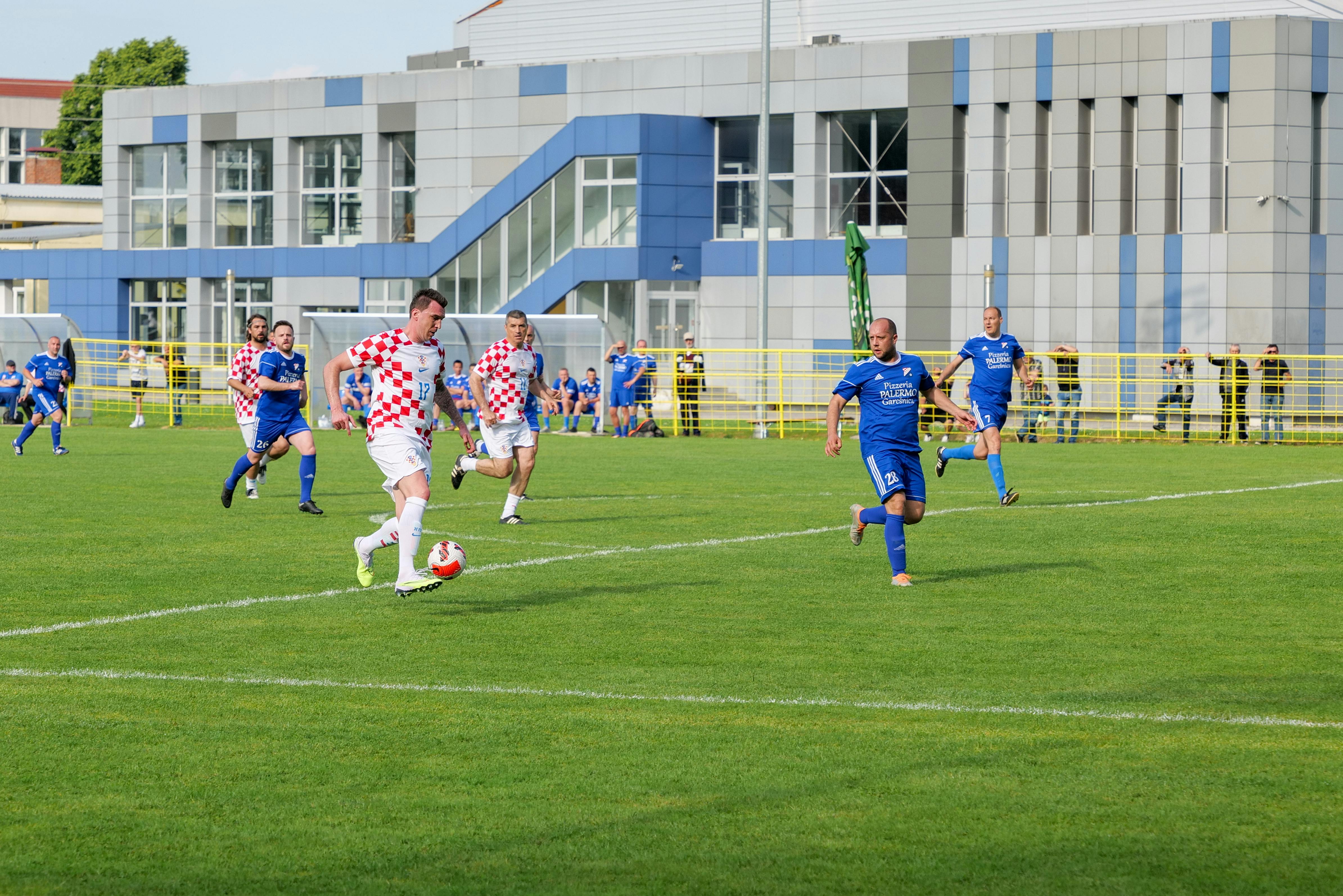
Local derbies do behave differently, and the effect shows up in the data rather than just in the folklore. Derby matches tend to produce more cards, more fouls, more stoppages, and — this is the important one — results that are less predictable from the teams' relative quality.
Several studies have found that the favourite wins less often in derbies than the same quality gap would predict elsewhere. The usual explanations are elevated intensity flattening technical differences, a partisan atmosphere affecting officiating marginally, and both squads treating the match as more significant than a league fixture would normally warrant.
Whatever the mechanism, if you're assessing a derby, adjusting your expectations towards the underdog is probably justified. Not because of the historical record, but because the match category behaves differently.
Exception two: persistent stylistic mismatches
The other case where head-to-head carries information is when there's a durable tactical reason.
Suppose one club has played a possession-based system with a high line for eight years under three different managers who all shared a philosophy. And suppose their rival has been a direct, counter-attacking side over the same period. That matchup has a structural character that persists across personnel changes, because both clubs have consistent identities.
In that situation, a lopsided head-to-head record might be telling you something real — that one style consistently troubles the other.
The test is whether you can articulate the mechanism. "They keep winning because their wingers isolate our full-backs and we've never fixed it" is a claim you can check. "They just have our number" isn't.
This is rarer than people think, because club identities are less stable than supporters believe. A club that changes manager every two years doesn't have a persistent style, whatever the marketing says.
The manager sub-case
Worth a note. Records between individual managers are quoted constantly and are an even smaller sample than club records — often five or six meetings.
There's a plausible mechanism, in that a coach who has repeatedly beaten another might have identified a specific weakness in his approach. But five matches across different clubs with different players is not enough to establish that, and the record is at least as likely to reflect which clubs each was managing at the time.
I'd treat manager head-to-heads as pure entertainment unless somebody can show me the tactical pattern.
The venue version
"They haven't won at this ground since 2013." This one has an occasional grain of truth for grounds with genuine peculiarities — a notably small or large pitch, an unusual surface, an intense atmosphere.
Pitch dimensions in particular are a real and underdiscussed factor. A narrow pitch genuinely disadvantages teams that rely on width, and pitch dimensions change far more slowly than squads do.
But most of the time it's just a small sample against a team that's been better than you for a decade, which is a fact about the clubs rather than the stadium.
How to use it
My practical rule: if you can state the causal mechanism in one sentence and check it against how the teams currently play, the head-to-head might be worth something. If your explanation is about history, psychology or a curse, it isn't.
And be particularly suspicious of any statistic that requires a specific qualifier to be impressive. "They've never lost at home to this opponent in a league match on a Saturday." That's four filters applied to find a streak, which means somebody went looking.