
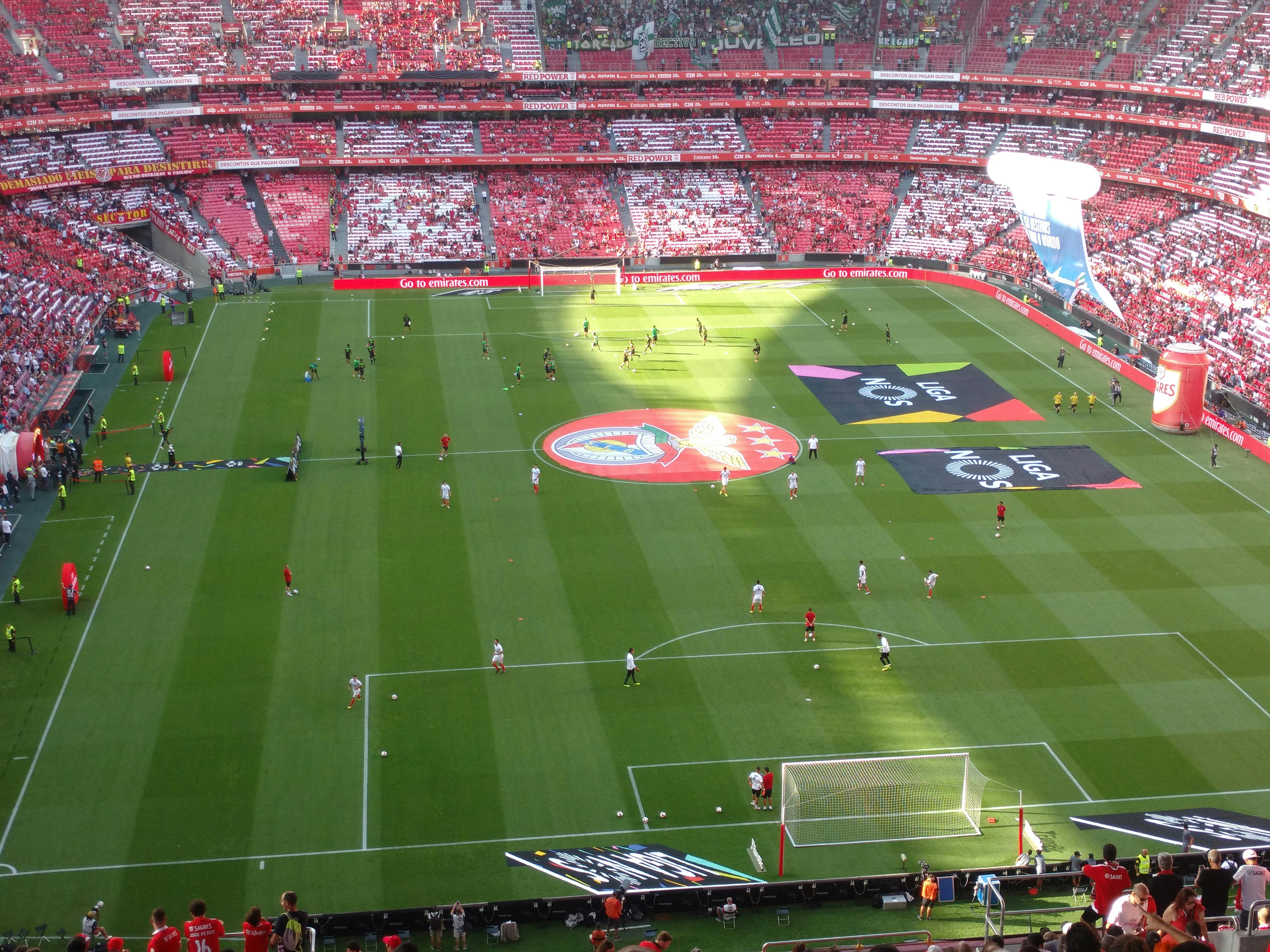
I'm generally sceptical about psychological explanations in football. Momentum, confidence, needing it more — these get invoked constantly and rarely hold up when you look at the numbers.
Derbies are the case where I've changed my mind. The effect appears in the data, it's consistent across leagues, and it shows up in specific measurable ways rather than as a vague impression.
What the data shows
Several things come up repeatedly when derby matches are compared to ordinary fixtures between the same quality of opponents.
More cards and more fouls. This is the most consistent finding across studies and leagues. Derbies produce significantly more disciplinary action, and the gap is large enough that it isn't plausibly noise.
More stoppages and longer effective match duration. Related to the above. Ball-in-play time tends to be lower in derbies.
Reduced favourite advantage. The stronger team wins less often than the quality gap would predict. This is the finding with the most practical relevance and it's been observed in multiple leagues.
Somewhat lower scoring in some datasets. Less consistent than the others, and probably a consequence of the cautious approach both sides often take rather than an independent effect.
Possible mechanisms
Several, and they're not mutually exclusive.
Elevated arousal flattening technique. There's a reasonable body of work in sports psychology on the relationship between arousal and performance, generally finding that very high arousal degrades fine motor skills and complex decision-making while maintaining or improving gross physical output.
That maps onto what derbies look like — more running, more contact, more intensity, and more technical errors. If a superior team's superiority is largely technical, elevated arousal erodes it.
Increased risk aversion. Both managers understand that losing a derby carries consequences beyond the three points. That produces cautious selections and conservative game management, which compresses the range of outcomes and favours the underdog.
Crowd effects on officiating, amplified. If crowd influence on referees is real — and the empty-stadium evidence says it is — then the most intense atmospheres should produce the largest effects. Derbies have the most intense atmospheres.
Motivational levelling. The weaker team is trying at maximum. The stronger team also tries at maximum, but there's a ceiling. So if effort is a variable in ordinary matches, derbies compress it, which helps whoever was previously leaving something in reserve.
Which matches count
Worth being precise, because "derby" gets applied loosely.
The effects are strongest for genuine local rivalries with historical and often social depth — clubs from the same city with a long shared history and distinct supporter identities.
They're weaker for manufactured rivalries between clubs that happen to have competed recently, and for regional derbies between clubs from different cities in the same area.
They're also weaker when one club has been in a different division for a long period, which interrupts the accumulation of grievance that gives these fixtures their character.
So the effect scales with something like the depth of the rivalry, which is hard to quantify but easy to recognise.
What it doesn't mean
Some care is needed about the conclusions.
It does not mean form goes out the window, which is the traditional formulation. The favourite still wins more often than not — just less often than usual.
It does not mean past derby results predict future ones. The effect is about the category of match, not about which team has historically won it.
And it does not mean the better team should approach it differently, necessarily. If your advantage is technical and technique degrades under intensity, the answer might be to try to reduce the intensity — control the tempo, keep the ball, take the crowd out of it — rather than to match the aggression.
The practical adjustment
One more piece of evidence worth noting, because it addresses the obvious objection that all of this is just the crowd. Derby effects appear to persist, in reduced form, in matches played without spectators and in fixtures held at neutral venues.
That matters because it separates two mechanisms. If the entire effect were crowd-driven, removing the crowd should remove it. The fact that something survives suggests that a meaningful part of the derby effect comes from the players themselves — the significance they attach to the fixture, the way that changes their decision-making, and the elevated physical commitment that follows from it. The crowd amplifies something that is already there rather than creating it.
If I'm assessing a derby, I shade my expectations towards the underdog by a modest amount, expect more cards than usual, and treat any prediction as carrying wider uncertainty than a normal fixture.
I'd also pay more attention than usual to which team has players who handle intensity well. It's not a measurable quality but it's a real one, and some players are visibly worse in these matches — more likely to react, more likely to be booked early and then be a liability for eighty minutes.
Managers know this and select accordingly, which is why derby lineups sometimes contain surprising omissions of talented but volatile players. That's usually a signal worth reading.